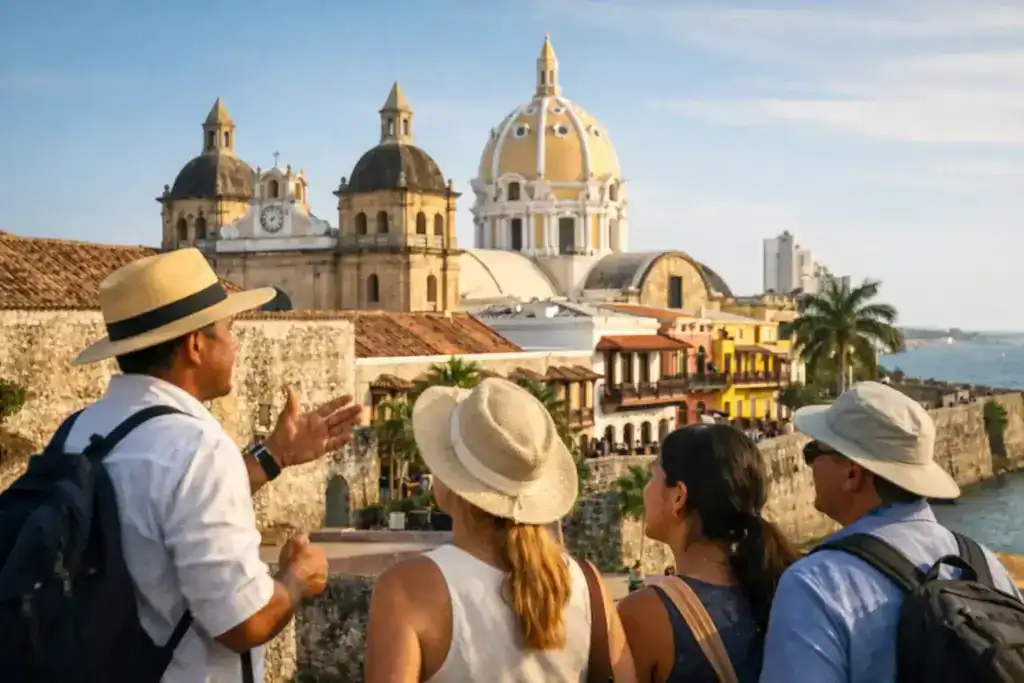
By the time you step through the clock tower and into Cartagena’s Old City, you already feel it – the stone walls, the balconies heavy with bougainvillea, the heat bouncing off centuries-old plazas. A Cartagena history walking tour takes that first impression and gives it meaning. Instead of just seeing beautiful streets, you start to understand why the city was fortified, how empires fought over it, and why Cartagena still feels so layered, alive, and proudly distinct.
For many travelers, the mistake is assuming the historic center is best enjoyed by wandering without context. That can be fun, especially if your goal is photos, coffee, and a relaxed afternoon. But if you want to know what actually happened here – why the churches are so imposing, why the walls matter, why certain neighborhoods feel so different from one another – walking with a knowledgeable local guide changes the experience completely.
Why a Cartagena history walking tour adds more than sightseeing
Cartagena is easy to love at a surface level. The architecture is striking, the streets are colorful, and every corner seems built for a postcard. What many visitors do not realize is that this beauty sits on top of centuries of conflict, trade, religion, resistance, and reinvention.
A strong Cartagena history walking tour connects those pieces in a way that feels human, not academic. You are not just hearing dates. You are hearing how Cartagena became one of Spain’s most important ports in the Americas, why it was repeatedly attacked, how slavery shaped the city, and how local identity grew through struggle as much as celebration.
That context matters because the city can otherwise feel too polished, too easy to romanticize. The history is richer than that. Cartagena is not only charming. It is strategic, resilient, and deeply shaped by Afro-Caribbean culture.
What you can expect to see on a history walk
Most history-focused walking tours begin in or around the Walled City, where Cartagena’s colonial core is most intact. This area is compact enough to explore on foot, but dense enough that every few blocks can shift the story.
The gates, walls, and defensive design
The fortifications are usually the first clue that Cartagena was never an ordinary colonial town. These walls were built to protect enormous wealth moving through the port, and they exist because the city was a target. Pirates, privateers, and rival European powers all wanted a piece of Cartagena.
On a guided walk, those walls become more than a scenic backdrop at sunset. You begin to understand how geography shaped defense, why certain entry points mattered, and how the city organized itself around threat as well as trade.
Plazas, churches, and political power
Cartagena’s plazas are beautiful, but they also reveal how colonial cities worked. Public squares were social centers, administrative spaces, and symbols of order. Churches were spiritual institutions, of course, but also statements of influence.
A guide can help you read these places properly. Why is one church more austere while another feels grander? Why does a square that now feels relaxed once carry a very different social meaning? Those are the details that turn a casual stroll into a real encounter with the city.
Stories of slavery, resistance, and identity
This is where a good tour stands apart from a shallow one. Cartagena’s history is not only about Spanish colonial architecture and military victories. It is also about the forced movement of African people, the development of Afro-Colombian culture, and the lives built in spite of oppression.
That part of the story should not be treated as a side note. It is central to understanding Cartagena today. The city’s food, music, language, religious expression, and neighborhood identity all carry that legacy.
Getsemani and the city beyond the postcard
Some tours stay tightly inside the Walled City. Others include Getsemani, and that often makes the experience better. Getsemani has its own rhythm and history, with roots in working-class Cartagena, political energy, and cultural expression that feels less polished and more immediate.
If your goal is depth rather than just colonial charm, including Getsemani is worth it. The trade-off is time. A tour that includes both areas usually needs a bit more walking and attention, but it gives you a fuller picture of how Cartagena grew beyond its elite center.
How to choose the right Cartagena history walking tour
Not every walking tour is built the same, even if the route looks similar on paper. The difference is usually in the guide, the pacing, and how the story is told.
If you want a true history experience, look for a tour that balances architecture with social and cultural context. Some walks lean heavily into legends, ghost stories, or quick highlights. Those can be entertaining, but they are not always the best fit if you want a serious understanding of the city.
Private tours tend to work well for couples, families, and small groups who want flexibility. You can move at your own pace, ask more questions, and spend more time on the topics that actually interest you. Shared tours are often more budget-friendly and can still be excellent, especially if you enjoy a social atmosphere and do not mind sticking to a fixed route.
Timing matters too. Morning tours are usually more comfortable because of the heat, and the streets feel calmer before the city fully fills in. Late afternoon can be beautiful for photos and softer light, but it may also be busier. If you are visiting during a hot month and not used to tropical weather, that is not a small detail. A shorter, earlier walk may be the smarter choice.
What makes a guided walk better than exploring on your own
Independent wandering absolutely has its place in Cartagena. If you have extra days, you should do both – take a guided history walk first, then return to your favorite spots later with more confidence.
The biggest advantage of a guide is interpretation. A plaque can tell you when a building was completed. A local expert can explain why it mattered, what changed over time, and how locals see that site now. That last part is especially valuable because history here is not frozen. It still shapes the city’s identity, tourism, and neighborhood life.
There is also the practical side. A well-run tour helps you cover the historic center efficiently without spending half your time looking at a map or wondering what you are missing. For travelers on a short stay, that matters. You can build a stronger connection to the city in two hours than you might in a whole day of unguided wandering.
For visitors who want culture without hassle, this is where Cartagena Adventures fits naturally. A curated local experience saves time, keeps the pace comfortable, and gives you stories that stay with you long after the vacation photos are posted.
Tips to get more from your walking tour
Wear breathable clothing, bring water, and do not underestimate the sun. Cartagena’s heat can sneak up on travelers, especially if you came for beaches and nightlife and did not expect a walking tour to feel physical.
It also helps to arrive curious rather than overprepared. You do not need to memorize dates beforehand. Ask questions as they come up. The best tours feel like a conversation with someone who knows the city deeply and wants you to see beyond the obvious.
If you are deciding whether to book a history walk early in your trip or later, early is usually better. Once you understand the city’s layout and story, everything else clicks into place – your meals, your neighborhood choices, your museum visits, even the way you experience sunset on the walls.
A Cartagena history walking tour is best for travelers who want depth
This kind of experience is not just for history buffs. It is for anyone who wants their trip to feel grounded in the place itself. If you are the kind of traveler who enjoys knowing the story behind what you are seeing, a history walk is one of the smartest ways to start your time in Cartagena.
And if your travel style leans more toward beaches, islands, and nightlife, that still applies. In fact, it may matter even more. Cartagena is fun, vibrant, and beautiful, but it becomes far more memorable when you understand the forces that shaped it. The city stops being a pretty backdrop and starts feeling personal.
Give yourself a few hours to walk the old stones with someone who can bring them to life. You will leave with better photos, yes, but more importantly, you will leave knowing what you actually saw.