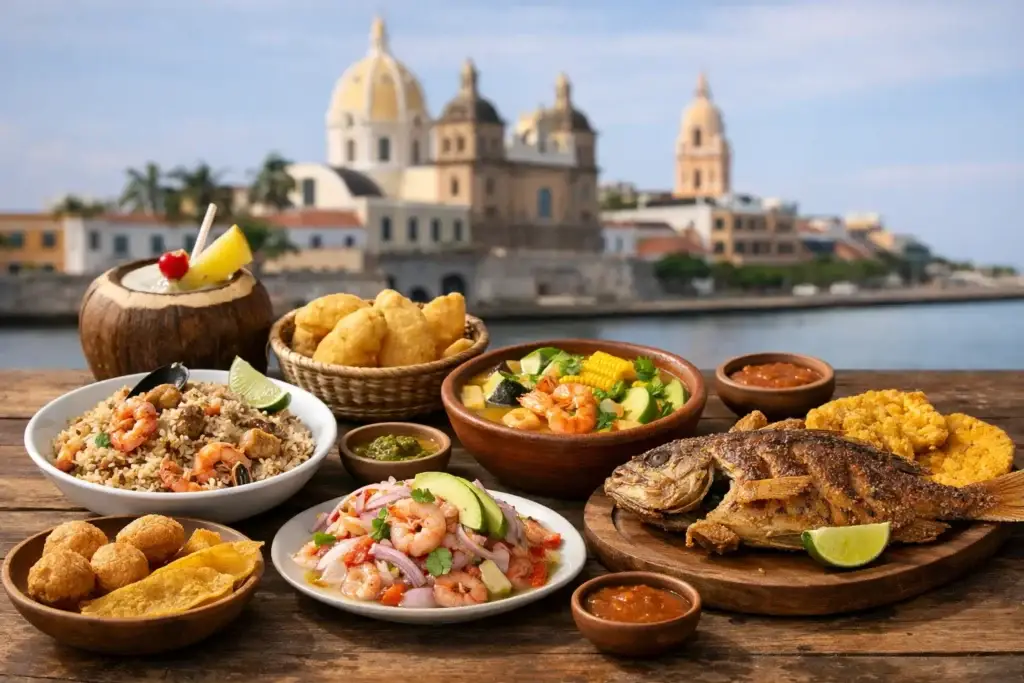
A plate of fried fish beside coconut rice, patacones, and a cold lime drink tells you more about the Caribbean coast than a menu ever could. If you are asking what foods define Cartagena cuisine, start with the flavors that show up at family tables, beach kiosks, market counters, and small neighborhood restaurants: coconut, plantain, fresh seafood, corn, cassava, herbs, and a welcome hit of heat.
Cartagena’s food is proudly coastal, but it is not one-note seafood. Spanish, Indigenous, African, and Arab influences meet here in recipes built for the tropical climate and the city’s lively, social rhythm. You can eat beautifully in the historic center, but some of the most memorable bites come from the places where locals grab breakfast, a late-afternoon snack, or a generous lunch after a day on the water.
What Foods Define Cartagena Cuisine?
The defining foods of Cartagena are tied to the Caribbean pantry. Fish and shellfish arrive fresh from the coast, while coconut milk enriches rice and stews. Plantains appear in several forms, from crisp savory rounds to sweet fried slices. Corn dough becomes arepas and empanadas, and cassava becomes fritters, breads, and hearty sides.
That combination makes Cartagena food feel both comforting and bright. A dish may be fried and deeply satisfying, then cut with lime, fresh salad, or a tart fruit juice. Spice is present, especially in sauces and street snacks, but heat is usually adjustable. If you prefer mild food, ask for ají on the side rather than skipping it entirely.
1. Coconut rice
Arroz con coco is the side dish that anchors a classic Cartagena lunch. Rice cooks with coconut milk until it becomes fragrant, lightly sweet, and rich enough to stand up to salted fish or seafood. Depending on the cook, it can lean pale and creamy or darker, with caramelized coconut solids adding a toasted flavor.
It is especially good with fried red snapper, but do not think of it as a background player. In Cartagena, a great coconut rice can be the reason you remember the whole plate. The sweetness should be subtle, not dessert-like.
2. Fried whole fish
Mojarra frita is the iconic beachside order. Usually a whole fish, often mojarra or red snapper, is seasoned, fried until the skin is crisp, and served with coconut rice, patacones, salad, and lime. Eating around the bones is part of the experience, so it is best approached slowly and without embarrassment.
On island and beach excursions, this is a satisfying, traditional lunch. Quality depends on freshness and frying technique, though. A good version has juicy flesh and a crisp exterior, not a heavy oily crust. If whole fish is not your thing, many restaurants also offer a fillet or grilled catch of the day.
3. Patacones and other plantain favorites
Patacones are green plantain rounds that are flattened, fried, and salted. They are crisp at the edges, tender in the middle, and made for scooping up sauces, ceviche, or seafood. They often arrive as a side, but they are so central to the table that they deserve your full attention.
You will also see maduros, ripe plantains fried until soft and sweet. The choice between the two depends on your mood: patacones bring crunch and salt, while maduros offer caramelized sweetness. Both are essential Caribbean comfort food.
4. Arepa de huevo
Cartagena’s signature street snack is not a standard grilled arepa. An arepa de huevo begins with corn dough, goes into hot oil, is opened, filled with an egg, then fried again. The result is crisp, rich, and surprisingly portable.
Some vendors add ground beef, and the best arepas have a thin but sturdy corn shell with a runny or softly cooked egg inside. This is a breakfast, snack, or post-nightlife food, depending on your schedule. It is filling, so one makes an excellent shared tasting stop if lunch is coming soon.
5. Empanadas and carimañolas
Empanadas are everywhere in Colombia, but Cartagena’s fried corn empanadas deserve a place on your snack itinerary. Filled with seasoned beef, chicken, cheese, or seafood, they are usually served with ají, a lively sauce that may include chilies, vinegar, cilantro, and onion.
Carimañolas are another must-try. They use cassava dough instead of corn, wrapped around cheese or meat and fried golden. Cassava gives them a softer, slightly chewier texture. Try both and notice how differently corn and cassava carry the same savory fillings.
6. Ceviche, but Cartagena-style
Cartagena ceviche is often served in a plastic cup from a street stand, dressed with lime, ketchup, mayonnaise, crackers, and sometimes a light pink sauce. Visitors expecting the clean, citrus-forward style of Peru may be surprised. This is a local coastal snack with its own personality: creamy, tangy, casual, and designed for quick enjoyment.
Shrimp ceviche is the common entry point, though mixed seafood versions are easy to find. For travelers with sensitive stomachs, choose a busy vendor or a reputable restaurant, and make sure the seafood is kept cold and prepared to order. Freshness matters more here than chasing the most dramatic street-side setup.
7. Seafood soups and stews
When you want something slower and more restorative than fried fish, look for cazuela de mariscos. This creamy seafood stew often combines shrimp, fish, squid, and other shellfish in a coconut milk-based broth. It is rich, aromatic, and usually served with rice and patacones.
Sancocho is another beloved option, although recipes vary widely across Colombia. On the coast, fish sancocho may include yucca, plantain, corn, and herbs in a deeply savory broth. These dishes are ideal on a rainy afternoon or after a long day of swimming, snorkeling, and sun.
8. Mote de queso
Mote de queso comes from Colombia’s Caribbean region and is a bowl worth seeking out if you want a more regional, home-style flavor. It is a thick soup made with ñame, or yam, and salty coastal cheese. The texture is hearty, the flavor is gently tangy, and it feels very different from the seafood-heavy dishes visitors tend to order first.
Not every restaurant in the walled city serves it daily, so it can be more of a lunch-special discovery than a guaranteed menu item. When you see it, order it. It offers a real taste of the broader Caribbean culture surrounding Cartagena.
9. Posta negra Cartagenera
Posta negra Cartagenera is a slow-cooked beef dish with a dark, glossy sweet-savory sauce. The name refers to the color of the caramelized sauce, often built with panela or brown sugar, spices, and a long braise. Served with coconut rice, it is one of the clearest examples of Cartagena cuisine moving beyond seafood.
This is a great dinner choice for groups with mixed appetites. It is flavorful but not usually spicy, and the tender meat pairs beautifully with the city’s signature rice. A well-made posta negra tastes balanced, not sugary.
10. Coastal sweets and fruit drinks
Cartagena’s sweet side is shaped by coconut, milk, tropical fruit, and panela. Cocadas, chewy coconut candies in flavors such as pineapple, guava, or dulce de leche, are easy to spot from street vendors. They make a fun quick treat, although their quality varies and some can be very sweet.
For something more refreshing, order a fresh juice. Lulo, tamarind, corozo, passion fruit, mango, and guanábana are common choices. Ask whether you want it made with water or milk, and choose little or no added sugar if you want the fruit itself to shine. A cold corozo juice, tart and berry-like, is especially rewarding in Cartagena’s heat.
How to Eat Cartagena Food Like a Local
Build your meals around the moment instead of trying to check every dish off in one day. Grab an arepa de huevo in the morning, make a seafood lunch part of a beach or island outing, and save posta negra or cazuela de mariscos for dinner. That pace leaves room for a market snack and a fruit juice without turning the trip into an eating contest.
Where you eat matters, too. The historic center offers polished presentations and atmospheric dinners, while Getsemaní and local neighborhoods can deliver more casual, direct flavors. Beach restaurants are unbeatable for setting, but menus can be simpler and prices may be higher because supplies arrive by boat. It depends on whether you are chasing a special meal, a quick local snack, or a relaxed lunch with your feet in the sand.
If you are exploring with Cartagena Adventures, ask your guide where they would eat that day, not just where visitors usually go. The best recommendation may be a fried-fish stop after an island trip, a family-run kitchen near the market, or a late-night arepa stand with a line of locals.
Come hungry, order with curiosity, and let the city’s food set the rhythm. In Cartagena, the most memorable meals are often the ones shared slowly, with lime on the table, music nearby, and one more patacón than you planned to eat.