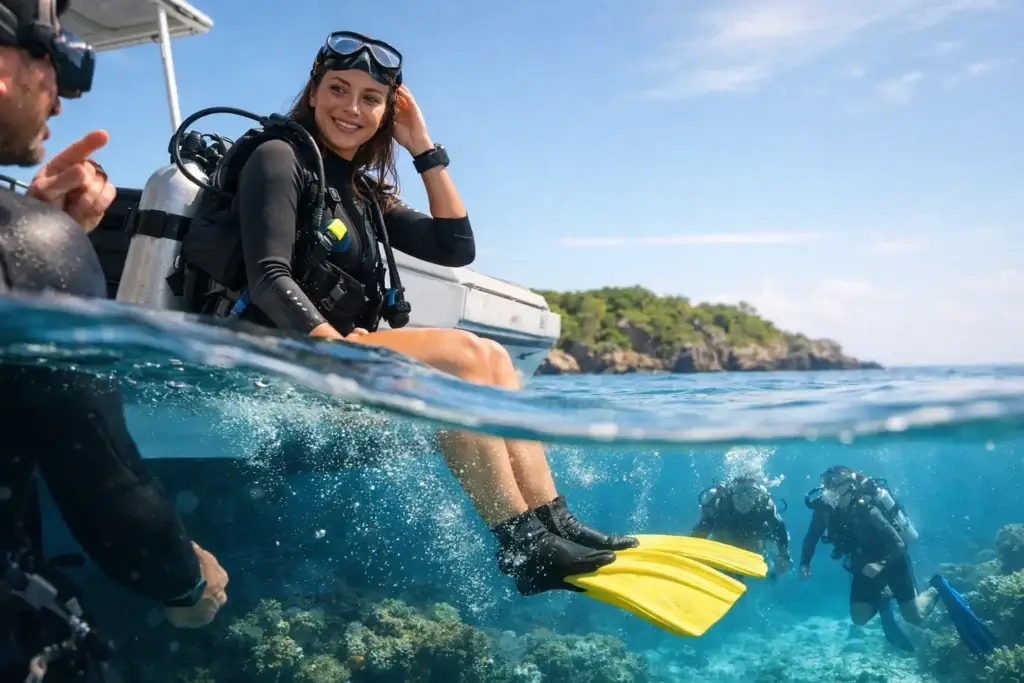
The boat has barely left the coast, the water is turning that bright Caribbean blue, and someone in your group asks the question that changes the whole day: can beginners try scuba diving? Absolutely. You do not need to arrive with a certification card, years of swimming experience, or a fearless personality. You do need the right type of experience, a patient instructor, and a willingness to learn a few simple skills before you descend.
For many travelers, a first scuba session becomes the moment Cartagena’s coast feels less like a postcard and more like a place you have truly experienced. Below the surface, the pace changes. Fish move through coral formations, sunlight flickers across the seabed, and the noise of the city disappears for a while.
Can beginners try scuba diving safely?
Yes, beginners can try scuba diving through a supervised introductory program, often called a discovery dive or beginner scuba experience. This is not the same as becoming a certified diver. It is a guided introduction designed for people who want to breathe underwater and explore a shallow dive site with a trained professional nearby.
A reputable operator begins with a safety briefing. You will learn how the mask, regulator, buoyancy device, and tank work, along with a few hand signals for communicating underwater. Then you practice in shallow water before heading farther out. The instructor will ask you to demonstrate basic skills, such as clearing a little water from your mask or recovering your regulator.
That preparation may sound serious, and it is meant to be. The best first dive feels exciting because the details have been handled carefully. Your guide should never rush you through skills just to get everyone underwater faster. If you need another minute to get comfortable breathing through the regulator, take it.
What a first scuba experience actually feels like
The first few breaths underwater can feel strange. Your brain knows you are in the ocean, but your body is breathing normally through a regulator. Most beginners settle in once they realize they can breathe slowly and steadily.
The key is to resist the urge to rush. Small, calm breaths help you conserve air and stay relaxed. Your instructor will control the pace, monitor your comfort, and stay close enough to assist if you need anything. On a beginner dive, you are not expected to lead, navigate, or solve complicated problems.
Pressure in your ears is another new sensation. As you descend, you will equalize by gently clearing your ears, much like during a flight. If your ears do not clear easily, signal your instructor and go up slightly. Never force it. A good dive is not measured by how deep you go – it is measured by how comfortable and present you feel.
For some guests, the biggest surprise is how peaceful it is. For others, it is the feeling of floating without effort once buoyancy clicks into place. Both reactions are part of the experience.
Do you need to be a strong swimmer?
You should be reasonably comfortable in water, but you do not need to be a competitive swimmer to try an introductory scuba dive. Beginner programs are built for first-timers, and you will wear flotation equipment that helps you stay balanced at the surface and neutrally buoyant underwater.
Still, comfort matters. If deep water makes you panic, tell the team before booking. A snorkeling trip may be a better first step, especially if you want to see marine life while building confidence in the water. There is no prize for choosing scuba before you are ready.
You should also be honest about your health. Certain heart, lung, ear, sinus, or mobility conditions may require a doctor’s approval or make diving unsuitable. Pregnancy, recent surgery, and some medications can also affect eligibility. You will usually complete a medical questionnaire before participating, and those questions deserve straightforward answers.
Choosing the right beginner dive in Cartagena
Cartagena is a great place to add a water day to your itinerary, but conditions can vary by season, site, weather, and boat route. The clearest water is not guaranteed every day, and visibility after rain or rougher weather may be lower than expected. That does not automatically ruin the experience, but it is worth setting realistic expectations.
Look for a beginner program that clearly explains what is included: instruction, equipment, boat transfers if needed, time in the water, and instructor supervision. Ask how many participants each instructor will guide. Smaller groups often mean more personal attention, which can make a major difference if you are nervous or traveling with friends who have different confidence levels.
It also helps to ask whether the dive starts with a shallow-water practice session and what happens if you decide not to continue. A professional team will respect a change of heart. Sometimes the best choice is to enjoy the boat ride, snorkel near the surface, and try scuba on another day.
Cartagena Adventures can help travelers match the right marine experience to their comfort level, whether that means a first-time scuba introduction, a snorkeling outing, or a private day on the water with more flexibility.
Questions worth asking before you book
You do not need to interrogate the operator, but clear answers build confidence. Ask whether the experience is suitable for non-certified divers, how deep the planned dive will be, and whether an instructor stays with you throughout the dive. Confirm the minimum age, available sizes for equipment, and whether there are extra restrictions for medical conditions.
If you are traveling in a group, mention that too. A certified diver and a complete beginner may be able to join the same excursion, but they may not follow the same underwater plan. Managing expectations before departure keeps the day fun for everyone.
How to prepare without overthinking it
The night before, get proper rest and avoid heavy drinking. Dehydration, a hangover, and a choppy boat ride are not a great combination. Eat a light meal, bring reef-safe sun protection for the boat, and listen closely during the briefing.
You do not need to buy gear for a one-time introductory dive. The operator should provide the essentials and make sure the mask, fins, and wetsuit or rash guard fit correctly. If you wear contact lenses, most people can dive with them comfortably. If you need prescription lenses, ask ahead about mask options.
One rule deserves special attention: do not fly soon after scuba diving. Diving and flying need to be spaced apart because of changes in pressure. Plan your underwater experience before your final travel day, and follow the waiting guidance provided by your dive professional.
Common first-timer worries, answered
“What if I panic underwater?” Tell your instructor before entering the water. They can give you extra time in the shallows and stay especially close. If you feel anxious, stop, signal, and focus on slow breathing. You can end the dive at any time.
“What if I cannot clear my ears?” This is common and not a failure. You may be able to try again more gradually, or you may decide to stay at a shallower depth. Never push through ear pain.
“Will I see amazing marine life?” You may see colorful fish, coral, and other Caribbean sea life, but nature is never a scripted show. Conditions and wildlife sightings change daily. Go in curious rather than expecting one specific animal.
“Can I get certified afterward?” Yes. A discovery experience can help you decide whether a full certification course is worth your vacation time. Just remember that an introductory dive does not qualify you to dive independently later.
Make your first descent your own
Scuba is not only for travelers who arrive already adventurous. It is for the curious person who wants to try something new, the couple looking for a story beyond the beach, and the group that wants one unforgettable shared moment in the Caribbean.
Choose a safety-focused team, speak up about your comfort level, and give yourself permission to go slowly. Whether you descend a few feet or finish the full guided experience, seeing the sea from below is a memorable way to meet Cartagena’s coast on its own terms.