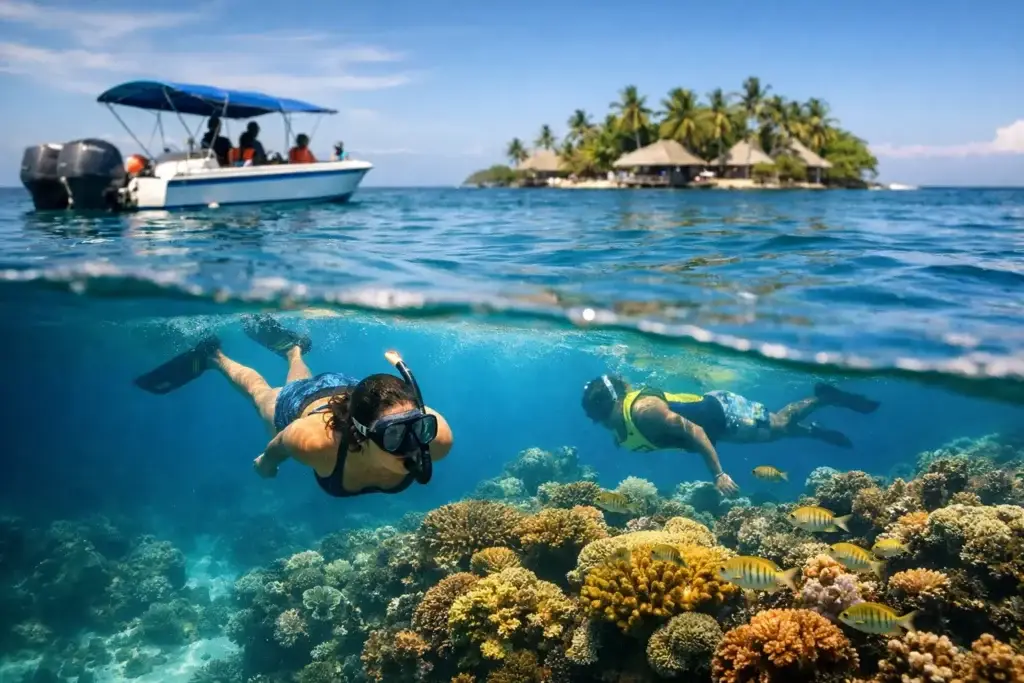
The best Cartagena reef snorkeling spots are not found beside the city walls. They are out on the Caribbean, where the water shifts from harbor blue to bright turquoise and the Rosario Islands begin to break up the horizon. A good snorkeling day here is less about chasing one famous pin on a map and more about choosing the right island, boat, timing, and guide for the conditions.
For travelers who want an easy, beautiful escape from the heat and energy of Cartagena, snorkeling can be one of the most rewarding day trips. You can float over coral gardens, see schools of tropical fish, stop for a relaxed island lunch, and still be back in the city in time for sunset drinks. The catch is that visibility, crowds, wind, and reef quality can vary dramatically from one stop to the next.
Where Are the Best Cartagena Reef Snorkeling Spots?
Most worthwhile reef snorkeling takes place within the Corales del Rosario and San Bernardo protected area, a broad marine zone southwest of Cartagena. The boat ride is part of the experience: expect roughly 45 minutes to an hour to reach many Rosario Islands stops, depending on the departure point, vessel, sea conditions, and itinerary.
The clearest water is often found farther from the busy city coastline. That is why a tour that simply advertises “snorkeling” is not always enough. Ask where the boat actually stops, how much time is spent in the water, and whether the itinerary is built around reef conditions rather than a quick photo stop.
Isla Grande: The Best All-Around Choice
Isla Grande is one of the strongest options for first-time snorkelers and groups with mixed interests. It has sheltered areas, island beach clubs, mangrove lagoons, and access to reef patches where beginners can get comfortable in calm water. It is also a practical choice if some people in your group want to snorkel while others would rather swim, relax, or enjoy lunch by the sea.
Conditions matter here. Some areas around Isla Grande see frequent boat traffic, while quieter reef sections can feel far more natural. A locally guided trip makes a real difference because captains can adjust the stop based on wind, water clarity, and the number of boats already anchored nearby.
Rosario Islands Reef Areas: Better for Coral and Color
The Rosario Islands are a collection of islands and reef formations rather than one single beach. This is where many visitors find the postcard Caribbean water they came for, particularly on calm, sunny days. Shallow reef zones can reveal parrotfish, sergeant majors, damselfish, sea fans, sponges, and coral structures in shades of tan, gold, purple, and green.
These are some of the most appealing Cartagena reef snorkeling spots for travelers who care more about time in the water than a party atmosphere. The best experience is usually a smaller-group or private boat itinerary that can spend longer at a well-chosen reef instead of moving quickly between crowded beach stops.
Keep expectations realistic. The reefs near Cartagena are living but vulnerable ecosystems, not untouched aquarium displays. Coral cover and visibility can differ from season to season, and a responsible guide will never promise perfect conditions every day. What they can do is choose the clearest available water and keep you away from fragile sections.
Barú: Great Water, but Choose the Right Side
Barú is famous for white sand, beach clubs, and the turquoise water around Playa Blanca. It can be a fantastic island day, but it is not automatically the best pure snorkeling choice. The most popular beach areas can become busy, and shallow sandy bottoms do not always offer much reef life.
The better approach is to pair a Barú beach stop with an offshore snorkeling stop or choose an itinerary that visits quieter water around the peninsula. Barú works especially well for couples and friend groups who want a full Caribbean day with swimming, lunch, music, and beach time, with snorkeling as one highlight rather than the entire plan.
Tierra Bomba: Convenient, but Not the Reef Leader
Tierra Bomba sits close to Cartagena, making it a smart option when you have limited time or prefer a shorter boat ride. Its beaches offer great views back toward the skyline, and the island is ideal for a quick beach escape. For serious reef snorkeling, however, it is usually not the first choice.
Water near Tierra Bomba can be affected by weather, currents, and the city’s nearby coastal activity. If your priority is coral and fish, use the extra travel time to reach the Rosario Islands. If your priority is an easy half-day on the water, Tierra Bomba can still be a fun and convenient choice.
How to Pick the Right Snorkeling Trip
A great trip should match your travel style, not just your budget. Shared tours are social, straightforward, and often include several island stops. They are a good fit if you enjoy meeting other travelers and do not mind following a fixed schedule. The trade-off is less control over where you linger, when you enter the water, and how busy each stop feels.
Private charters are the better choice for couples, families, and groups who want to prioritize the reef. You can leave earlier, avoid the loudest party stops, spend more time snorkeling, and choose a pace that feels relaxed. Private does not always mean luxury-only either. It can simply mean a more flexible boat, captain, and route designed around your group.
Before booking, look beyond the word “snorkeling.” Confirm whether mask, snorkel, fins, life jackets, drinking water, lunch, and park-related fees are included. More importantly, ask whether there is a guide in the water. A captain can get you to an island, but an in-water guide helps beginners adjust their mask, spot marine life, and avoid accidental contact with coral.
When Visibility Is Best
The Caribbean does not run on a single perfect snorkeling season. Calm seas and strong sun generally help visibility, while wind, rain, and choppy water can stir up sediment and make conditions less clear. Morning departures are often the best bet because the sea can be calmer before afternoon winds build, and you arrive at popular areas before the busiest boats.
Dryer stretches of the year can bring excellent water days, but weather is never guaranteed. Even in ideal months, a windy morning may change the plan. This is one reason experienced local operators monitor conditions and keep alternative stops in mind rather than forcing the same route every day.
If seeing underwater color is your main goal, do not book a late departure just because it is cheaper or promises a sunset return. The best light for reef viewing is usually earlier, when the sun is higher and you have more time to adjust if one location is not clear.
What You Will Actually See Underwater
Expect a Caribbean reef experience, not a deep-ocean expedition. Most snorkeling takes place in shallow to moderate-depth water where sunlight reaches the bottom. You may see bright blue tangs, yellowtail snapper, parrotfish, trumpetfish, small barracuda, rays, and dense clouds of tiny fish moving around coral heads.
Marine life is never scheduled. Some days bring impressive fish activity; other days are quieter. Strong swimmers may enjoy a longer drift over reef edges, while new snorkelers are often happiest in a protected, shallow area where they can stand or hold a flotation device if needed.
For many guests, the moment that sticks is not the rarest animal sighting. It is the first time they put their face in the water and realize how much life is moving just below the surface.
Snorkel Without Damaging the Reef
Coral is easy to harm and slow to recover, even when it looks like a hard rock. Never stand on it, hold it, kick it with fins, or chase fish through it. Keep your body horizontal in the water, especially when you are learning to use fins, and give every coral formation a little extra space.
Use reef-conscious sun protection when possible, but do not rely on sunscreen labels alone. The most reliable protection is a rash guard or swim shirt, a hat while on the boat, and shade during the hottest part of the day. You will also be more comfortable after several hours on the water.
Bring a secure pair of sunglasses, a dry bag for your phone, and a towel or light cover-up. If you are prone to motion sickness, take your preferred remedy before boarding, not after the boat starts moving. The ride can be bumpy when the wind picks up.
Make the Day Feel Like Yours
The difference between an average island excursion and a standout snorkeling day often comes down to the route. Tell your operator what you actually want: calm water for beginners, more reef time, a quiet beach lunch, music and a social crowd, or a private boat with room to move at your own pace. Cartagena Adventures can help shape a route around those priorities instead of sending every traveler into the same template.
Leave room in the plan for a little spontaneity. If the water is crystal clear at the first reef, stay longer. If a beach stop is crowded, move on. The Caribbean rewards travelers who choose a good crew, respect the reef, and let the best conditions of the day lead the way.