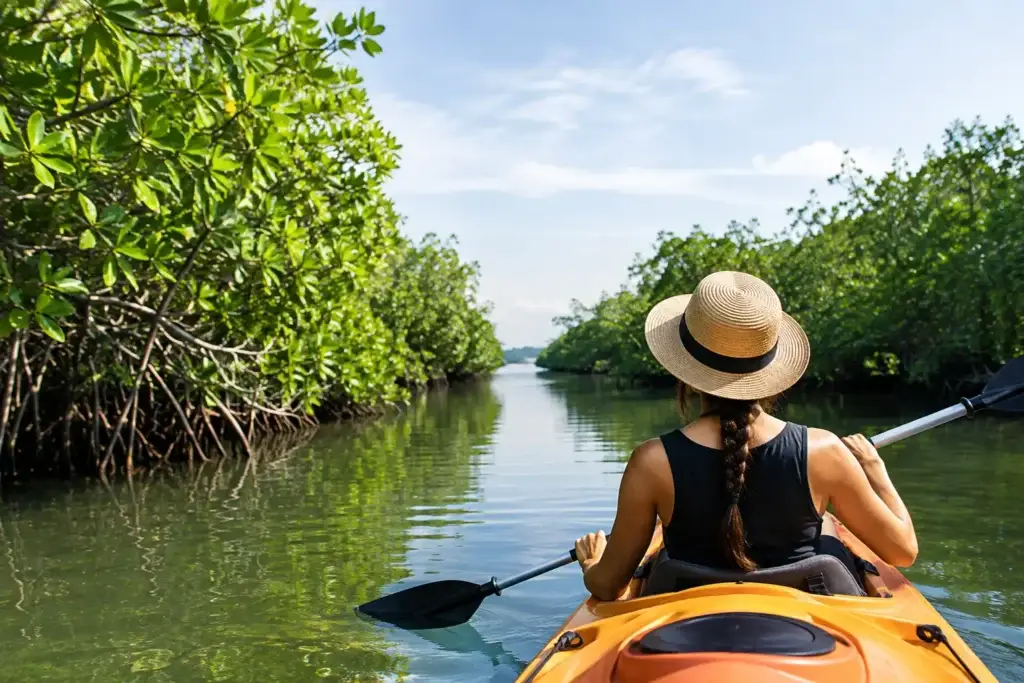
The water narrows, the city noise falls away, and suddenly you are gliding beneath tangled green roots where herons stand perfectly still. To explore Cartagena mangroves is to see a quieter side of the coast – one shaped by tides, fishing traditions, birdlife, and the people who know every turn in the channels.
For travelers who have already pictured the Old City walls and Rosario Islands beaches, a mangrove outing offers a welcome change of pace. It is less about checking off a landmark and more about being present: watching a crab move across a root, hearing paddles tap the water, and learning why this wetland matters to the communities living alongside it.
Where to explore Cartagena mangroves
Most mangrove experiences take place near La Boquilla, a fishing community just northeast of Cartagena’s historic center. The area connects with the Ciénaga de la Virgen, a coastal lagoon system where saltwater and freshwater influences create an ideal habitat for mangroves, fish, crustaceans, and dozens of bird species.
This is not an open-sea boat ride. The appeal is in the narrow passages. A local guide or boatman steers through natural tunnels formed by mangrove branches, often slowing down so guests can notice details that are easy to miss from a larger tour boat. Depending on water levels and the chosen route, you may travel through broad lagoon sections before entering calmer, shaded channels.
La Boquilla adds cultural depth to the experience. Fishing is a way of life here, and the best guides do more than point out wildlife. They explain how the lagoon supports local families, how seasonal conditions affect the catch, and why protecting the mangroves protects the coast itself.
Why these wetlands are worth your time
Mangroves are part of Cartagena’s natural defense system. Their root networks help hold sediment in place, reduce shoreline erosion, and shelter young fish and other marine life. They also provide resting and feeding areas for birds, which is why even travelers who do not consider themselves birdwatchers often leave with plenty of photos.
You may spot snowy egrets, herons, pelicans, kingfishers, and cormorants. Sightings change with the season, weather, tide, and how quietly the group moves through the water, so no responsible guide should promise a specific animal on a specific day. That unpredictability is part of the experience. The lagoon is a living ecosystem, not a staged attraction.
The scenery also offers a useful counterpoint to Cartagena’s most famous views. Instead of colonial balconies, beach clubs, and rooftop music, there are root systems rising out of dark water, flashes of white wings against green leaves, and the distant sounds of working boats. For couples, it can be a peaceful break between busier plans. For families and small groups, it is an easy way to add nature and local culture without committing to a full-day excursion.
Canoe or motorboat: choose the right pace
A traditional canoe is often the most atmospheric way to experience the mangrove tunnels. It moves quietly, fits comfortably through narrow channels, and makes it easier to hear birds and the soft movement of water around the roots. It is a particularly good fit for travelers who want photos, conversation with a local guide, and a slower, more immersive outing.
A small motorboat can make sense when your group has limited time, wants to cover more of the lagoon, or prefers less physical effort. It may also be the better option for guests with mobility concerns, though accessibility varies by dock, boat design, and water conditions. Ask before booking rather than assuming every route offers the same level of comfort.
Private tours are ideal if you want flexibility. You can set a relaxed pace, request extra time for photography, coordinate pickup around another activity, or make room for a cultural stop in La Boquilla. Shared outings can be a great value and a fun choice for social travelers, but they naturally follow a group schedule. Neither option is automatically better – it depends on whether your priority is personalization, price, or meeting other visitors.
The best time for a mangrove tour
Morning is usually the strongest choice for cooler temperatures, softer light, and active birdlife. An early departure also leaves the rest of your day open for the Old City, a beach afternoon, or dinner plans. Late afternoon can be beautiful as well, especially if you prefer warmer light and a more relaxed mood.
Weather deserves some flexibility. Cartagena’s tropical climate means rain showers can arrive quickly, particularly during wetter months. A little rain does not always ruin a mangrove excursion, and the channels can feel especially lush afterward. However, heavy rain, strong winds, or unusual water conditions can affect route choices and safety. A professional operator will adjust the plan when needed instead of forcing an experience that is not right for the day.
If photography matters most, aim for early morning or the last hours before sunset. If comfort is your top concern, avoid the strongest midday heat. Bring a hat, sunscreen, insect repellent, sunglasses, and a refillable water bottle. Lightweight clothing that can handle a splash is smart, along with shoes that stay secure when stepping in and out of a boat.
What a respectful visit looks like
Mangroves can look tough, but they are sensitive habitats. A good outing should feel relaxed without treating the lagoon as a theme park. Stay seated when asked, avoid touching roots or nests, keep voices low in narrow channels, and never feed wildlife. The best sightings happen when animals are not pressured to perform for visitors.
Skip single-use plastic whenever possible. A bottle cap or snack wrapper can easily end up in the water, where it becomes a problem for birds, fish, and the people who depend on the lagoon. If you bring a phone or camera, use a secure strap or waterproof pouch. That small bit of preparation protects both your gear and the environment.
It also helps to choose guides with genuine local knowledge. Community-based experiences keep the stories connected to the place and give visitors a clearer understanding of what they are seeing. At Cartagena Adventures, we believe local guidance turns a beautiful boat ride into a more meaningful encounter with the region.
Pair your mangrove experience with La Boquilla culture
A mangrove visit works especially well as part of a half-day plan. You can pair it with a local lunch featuring fresh seafood, spend time learning about fishing traditions, or continue toward the coast for a beach break. This combination is ideal for travelers who want a taste of Cartagena beyond the usual city-and-islands itinerary.
Keep expectations grounded: La Boquilla is a real working community, not a polished resort zone. That is exactly where its character comes from. Go with curiosity, respect local routines, and leave room for your guide to shape the day around conditions on the water.
When you are planning your Cartagena itinerary, save a morning or late afternoon for the mangroves. Let the city’s fast rhythm wait for a few hours while a local guide takes you into the channels where Cartagena’s coastline tells a different story.