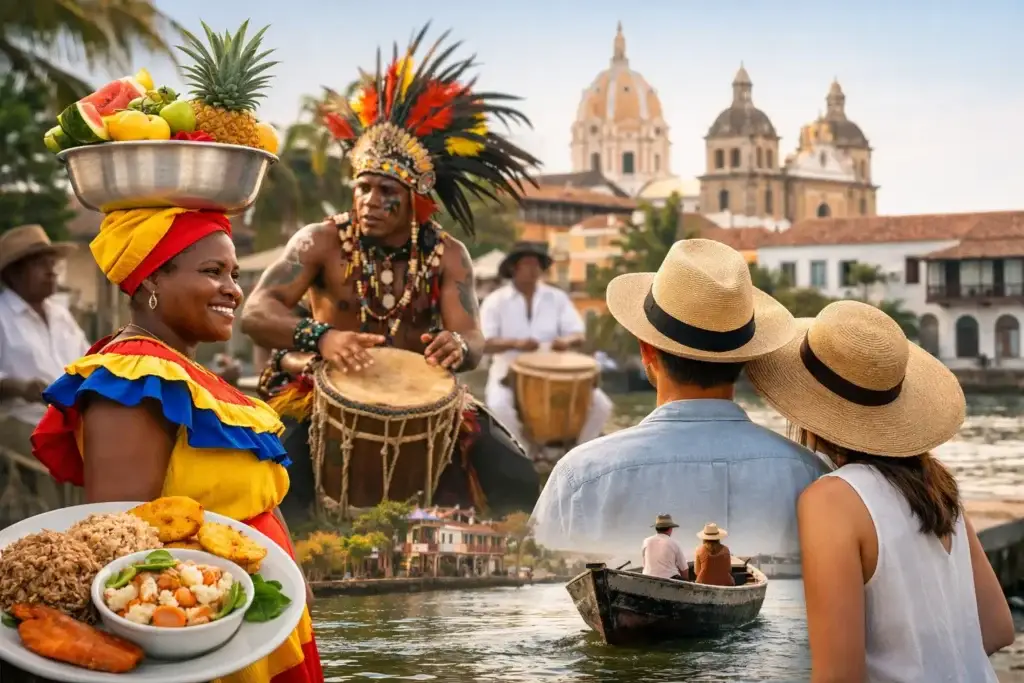
At sunset, Cartagena changes tempo. Drums carry through plazas, vendors set out fruit and arepas, and the walls of the Old City glow gold against the Caribbean sky. The best Cartagena cultural experiences are not limited to checking off monuments. They put you close to the music, food, stories, and communities that give this city its unmistakable energy.
For travelers who want more than a quick photo stop, the key is choosing experiences with context. A great local guide can explain why a balcony is painted a certain color, how palenquera traditions have shaped the city, or which family recipe tells a larger story about Colombia’s Caribbean coast. Here are the cultural moments worth making room for in your itinerary.
1. Walk the Walled City with a Storyteller
Cartagena’s historic center is beautiful at any hour, but its real power is in the details. The city walls, colonial homes, churches, and narrow streets hold stories of Spanish rule, piracy, trade, faith, resistance, and independence. A guided heritage walk turns what could feel like a postcard into a living place.
Look for a route that goes beyond the obvious clock tower and main plazas. The best walks include quieter streets, the old city gates, Las Bóvedas, and the different personalities of neighborhoods such as San Diego and Centro. Ask about the people who built the walls, the role Cartagena played in colonial trade, and how the city has changed since its UNESCO recognition.
Morning is best for cooler temperatures and lighter crowds. An evening walk, however, brings a more dramatic atmosphere and can be a smart choice for couples or groups planning dinner afterward.
2. Spend an Evening in Getsemaní
Getsemaní has long been Cartagena’s neighborhood of makers, workers, musicians, and independent spirit. Today, its streets are filled with murals, flags, small bars, dance spots, and spontaneous conversations. It is lively, photogenic, and far more meaningful when you understand its role in the city’s history.
Join a guided walk that explains the neighborhood’s connection to the independence movement and its ongoing community identity. Then stay awhile. Grab a cold drink in Plaza de la Trinidad, watch local families gather, and listen for the sound of champeta, salsa, or vallenato moving from nearby doorways.
Getsemaní is social, especially after dark, so it suits friend groups and travelers who enjoy a little movement around them. If you prefer a quieter cultural experience, visit in late afternoon before the nightlife crowd arrives.
3. Taste Cartagena Through a Cooking Experience
Cartagena’s food is a meeting point of African, Indigenous, Spanish, and Caribbean influences. Coconut rice, fried fish, plantains, fresh seafood, tropical fruit, and savory stews all tell part of that story. A cooking class or market-to-kitchen experience gives you more than a meal – it gives you techniques and flavors you can take home.
Start with a market visit when possible. Seeing herbs, fish, yuca, ñame, and local fruit in context makes every later bite more interesting. In the kitchen, you may learn to prepare arepas de huevo, patacones, posta negra, ceviche, or arroz con coco, depending on the menu and season.
This is one of the strongest choices for couples, families, and anyone who wants an interactive afternoon without spending hours in the heat. Let your host know about dietary needs in advance. Seafood is central to many coastal menus, but vegetarian-friendly options can often be arranged with notice.
4. Hear the Roots of Afro-Caribbean Cartagena
The rhythm of Cartagena is not background music. It is history you can hear. African cultural traditions have profoundly shaped the city’s language, cuisine, dance, religion, and sound, especially through genres such as champeta and mapalé.
A music or dance experience is the best way to understand this energy from the inside. You do not need to be an experienced dancer. The point is to learn the movement, hear the instruments, and understand why these styles matter to the people who keep them alive.
For a deeper perspective, pair a dance class with a visit to a local cultural space or a guided evening centered on Afro-Caribbean history. A performance is fun. A performance with explanation stays with you longer.
5. Visit San Basilio de Palenque with Respect
About an hour outside Cartagena, San Basilio de Palenque is widely recognized as the first free African town in the Americas. Founded by people who escaped slavery during the colonial era, the community has protected distinctive traditions, including its own language, musical forms, medicine, and social customs.
A visit can be one of the most powerful cultural experiences near Cartagena, provided it is approached as a community visit rather than a spectacle. Choose an organized experience led by people with genuine local ties, listen more than you speak, and be mindful when taking photographs. The value is in the exchange: hearing stories of resilience, tasting traditional food, and learning how Palenque’s heritage remains active today.
This is not a rushed add-on between beach plans. Give it a full half-day or day and go with curiosity, not a checklist.
6. Follow the Street Art and Community Voices of Getsemaní
Cartagena’s murals are more than colorful backdrops. In Getsemaní, street art often reflects neighborhood pride, Afro-Caribbean identity, social change, local heroes, and everyday life. A thoughtful mural walk reveals themes you would likely miss on your own.
The trade-off is simple: self-guided wandering lets you move at your own pace, while a guide provides the stories behind the walls. If you have only one afternoon in Getsemaní, a guided route is usually the better use of time. You can always return later for photos, coffee, and people-watching.
7. Explore Cartagena’s Sacred Spaces
Cartagena’s churches are architectural landmarks, but they also reflect the complicated spiritual and political history of colonial Colombia. The Cathedral of Santa Catalina de Alejandría, Iglesia de San Pedro Claver, and other historic churches reveal different layers of the city.
San Pedro Claver is especially meaningful for travelers interested in human rights history. The church and surrounding complex honor the priest known for his ministry to enslaved Africans arriving in Cartagena’s port. It is a place for reflection, not just sightseeing.
Dress respectfully when entering active religious spaces, and remember that service times may limit access. A heritage guide can help you fit churches into a broader story of Cartagena instead of treating each one as an isolated stop.
8. Learn the City Through Its Markets and Everyday Food
Not every cultural memory is made in a museum. Sometimes it is a juice made from lulo or corozo, a hot arepa handed across a counter, or the sound of a busy market before noon. Local markets offer a more immediate view of what people cook, buy, and eat every day.
Markets can feel intense if you are visiting for the first time, particularly at peak hours. Going with a local guide makes the experience easier and more comfortable, while also helping you identify ingredients and choose safe, high-quality snacks. Come hungry, carry small bills, and leave room for surprises.
9. See the City from the Water at Sunset
A sunset cruise is often seen as a leisure activity, and it absolutely can be. But Cartagena Bay also offers a different angle on the city’s history. From the water, you can see the relationship between the old defenses, the port, the modern skyline, and the Caribbean that has shaped Cartagena for centuries.
Choose a smaller boat or private outing if you want conversation, views, and a more relaxed pace. Larger party boats are ideal when the goal is music and celebration. Both can be memorable, but they are very different experiences, so match the cruise to your group’s mood.
10. Build a Day That Connects the Dots
The most rewarding cultural days have a rhythm. Begin with a heritage walk in the Walled City, stop for a traditional lunch, spend late afternoon with Getsemaní’s murals and plazas, then finish with live music or a dance experience. That sequence helps the city make sense: colonial power, Caribbean flavor, neighborhood identity, and the joy of modern Cartagena all in one day.
Cartagena Adventures can help tailor that kind of day around your interests, whether you want food, history, music, photography, or a balanced mix. Private options are especially useful for travelers who want to linger, ask more questions, or move at their own pace.
The best cultural experiences do not require you to see every landmark. Choose one or two that invite real conversation, arrive with an open mind, and let Cartagena show you the parts that cannot be captured in a single photo.