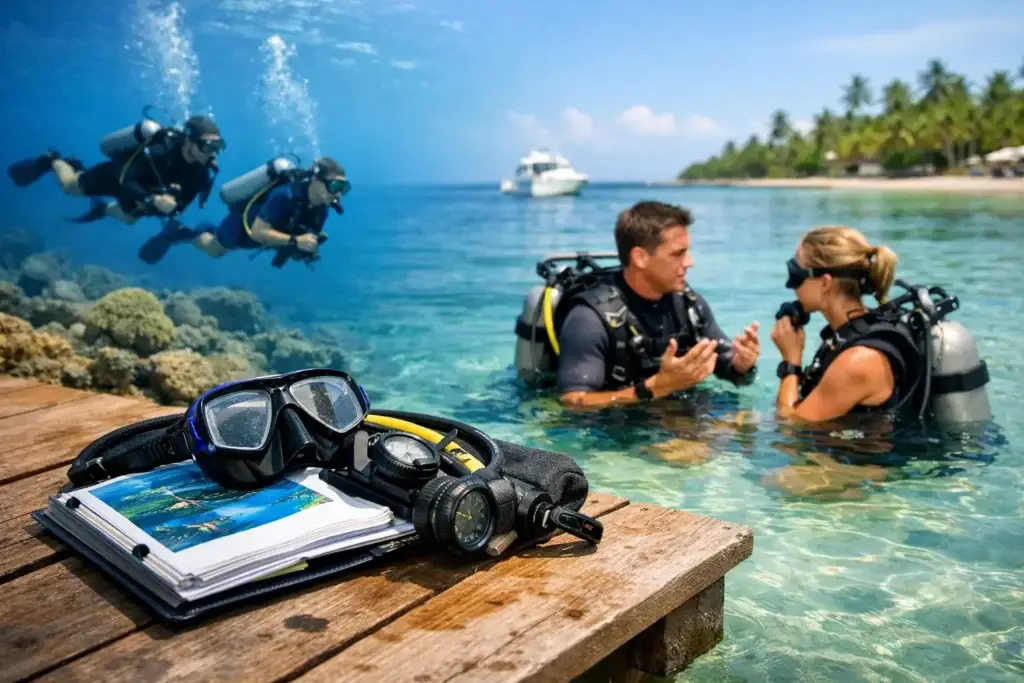
The moment you see the Caribbean water around Cartagena, it is tempting to book the first boat out and figure out the rest later. But choosing among scuba certification options before you travel can turn a good island day into the start of a hobby you can enjoy almost anywhere in the world. The right choice depends less on how adventurous you feel and more on your time, comfort in the water, and the kind of dives you hope to make.
For some travelers, a supervised first dive is the perfect add-on to a beach escape. For others, a full entry-level course is the better investment – especially if coral reefs, shipwrecks, and future dive trips are already on the wish list. Here is how to choose without getting buried in acronyms.
Start With the Experience You Actually Want
Scuba training is not one single product. It ranges from a short introductory session to professional-level training, with plenty of useful steps in between. The best option is the one that matches this trip and leaves you feeling confident, not rushed.
If you only have a free afternoon and want to try breathing underwater with an instructor beside you, an introductory experience may be enough. If you want to dive independently with a certified buddy on future vacations, you need an entry-level certification. If you are already certified but want deeper dives, better buoyancy, or specific skills for wrecks and night conditions, a continuing-education course makes more sense.
The key distinction is simple: a resort-style introductory dive lets you experience scuba under direct professional supervision. It does not qualify you to rent gear or plan recreational dives on your own later.
Scuba Certification Options for First-Time Divers
Discover scuba or a supervised introductory dive
This is the lowest-commitment way to find out whether scuba is for you. You will typically receive a short safety briefing, learn a few essential skills in shallow water, and make a closely supervised dive in calm conditions. It is popular with couples and friend groups because no previous certification is required.
An introductory dive can be a memorable Cartagena experience, particularly when paired with a boat day near the Rosario Islands. Still, treat it as a taste of scuba rather than a shortcut around training. You will be learning how to clear water from your mask, breathe through a regulator, equalize pressure in your ears, and communicate underwater – all while adapting to a new environment. A patient instructor and a small group can make a major difference.
This choice is ideal when your itinerary is packed, but it is not ideal if you want the freedom to return next year and join certified-diver excursions.
Scuba Diver or a partial entry-level certification
Some training agencies offer a shorter, limited certification often called Scuba Diver. It usually covers core knowledge and confined-water skills, then qualifies you to dive to a restricted depth with a dive professional. Requirements vary by training organization, so confirm exactly what the credential allows before booking.
This route can work for travelers who have a few days but cannot complete a full open-water program. The trade-off is that it offers less independence and may require additional training later to become fully certified. It is a reasonable stepping stone, not always the best value for someone who expects to dive regularly.
Open Water Diver certification
For most beginners, Open Water Diver is the credential to aim for. Whether it is issued through PADI, SSI, NAUI, or another recognized agency, this is the widely accepted entry-level qualification that opens the door to recreational diving around the globe.
A typical course includes academic learning, skill practice in a pool or confined water setting, and several open-water training dives. You will learn practical habits that matter far beyond the course: checking equipment, controlling buoyancy, managing air, navigating basic dive plans, responding to common problems, and diving responsibly with a buddy.
Plan on several days rather than squeezing it between late nights and early island departures. The exact schedule depends on the operator, your pace, weather, and whether you complete the classroom portion online before arriving. A course that gives you enough time to absorb the skills is worth far more than one that promises speed alone.
Agency Names Matter Less Than Course Quality
Travelers often ask whether PADI, SSI, NAUI, or another agency is “better.” In practice, a recognized entry-level certification from a reputable agency is accepted by dive operators worldwide. The more meaningful question is who is teaching you and how the course is run.
Look for clear communication about the training schedule, class size, included equipment, and the instructor-to-student ratio. Ask where confined-water training happens, how open-water dives are selected, and what happens if weather or comfort level requires a schedule change. Good operators welcome these questions because safe, relaxed divers learn better.
Also ask whether rental gear is included and whether it is properly sized. A mask that leaks or fins that hurt can distract a first-time diver from the skills that deserve their attention. You do not need to buy a full kit before your first course, but bringing a personal mask can be worthwhile if fit and comfort matter to you.
Referral Courses: Train at Home, Finish in Cartagena
A referral course splits your training between two locations. You complete the knowledge development and confined-water skills with a dive center near home, then finish the required open-water dives while traveling. It can be an excellent fit for visitors who want to spend less vacation time in a classroom and more time in the Caribbean.
The upside is flexibility. You arrive already familiar with the equipment and basic skills, then complete the ocean portion in warm water. The downside is coordination: your paperwork, skill records, medical forms, and timing must all be in order. Not every local schedule can accommodate referral divers at the last minute.
Before leaving home, confirm that your documents are current and that the receiving instructor can complete your specific agency’s referral requirements. Allow extra time in your itinerary rather than booking your final qualifying dive the morning before a flight.
Continuing Education After Open Water
Your first certification is a license to keep learning, not proof that every kind of dive is appropriate right away. Once you have a few comfortable dives, specialty courses can help you build skills for the experiences you want most.
Advanced-level programs generally introduce divers to several different types of diving, often including deeper diving and navigation. They are useful for people who want more guided experience and exposure to new conditions, but the course format varies by agency. Read the actual dive requirements instead of assuming every “advanced” card represents the same experience level.
Specialties are more focused. Buoyancy training is one of the smartest early choices because better control means less effort, more air efficiency, and less accidental contact with reefs. Enriched air nitrox can be useful for divers doing multiple dives over several days, while wreck, night, deep, and underwater photography courses are best chosen when they match your interests and local conditions.
Rescue Diver training is a bigger commitment, but many experienced divers consider it the most confidence-building course they take. It shifts your attention beyond your own equipment and teaches you to recognize, prevent, and respond to problems involving other divers. It usually requires current first-aid and CPR training as well.
Timing, Health, and Flying: The Details That Protect Your Trip
Scuba is accessible to many people, but it is not something to book casually after a heavy night out or with a bad cold. Congestion can make equalizing painful or unsafe, and fatigue affects judgment underwater. Most courses require a health questionnaire; depending on your answers, you may need medical clearance before diving.
Do not treat the paperwork as a formality. Disclose relevant conditions honestly, particularly heart or lung concerns, past ear issues, pregnancy, medications, and recent surgery. A qualified physician can advise whether diving is appropriate for your situation.
Your flight schedule matters too. After scuba diving, you need a surface interval before flying because of pressure changes. The recommended wait varies with the number and type of dives, so ask your dive professional and build a no-dive day into the end of your trip. This is one reason a certification course should sit early in your Cartagena itinerary, not on the final day.
Choose Confidence Over a Fast Card
A certification card is valuable because it represents training, practice, and responsibility – not because it is another item checked off on vacation. If you are curious, start with a supervised experience. If you know the ocean will keep calling you back, give yourself the time for Open Water training. And if you already hold a card, choose the next course based on the diver you want to become, not the deepest or flashiest badge available.
Cartagena Adventures can help travelers shape an island itinerary around their experience level, so the boat ride, beach time, and underwater plans feel like one well-organized day. Leave space to learn at your own pace, listen closely to your instructor, and let that first calm breath beneath the surface be the moment that stays with you long after the trip ends.