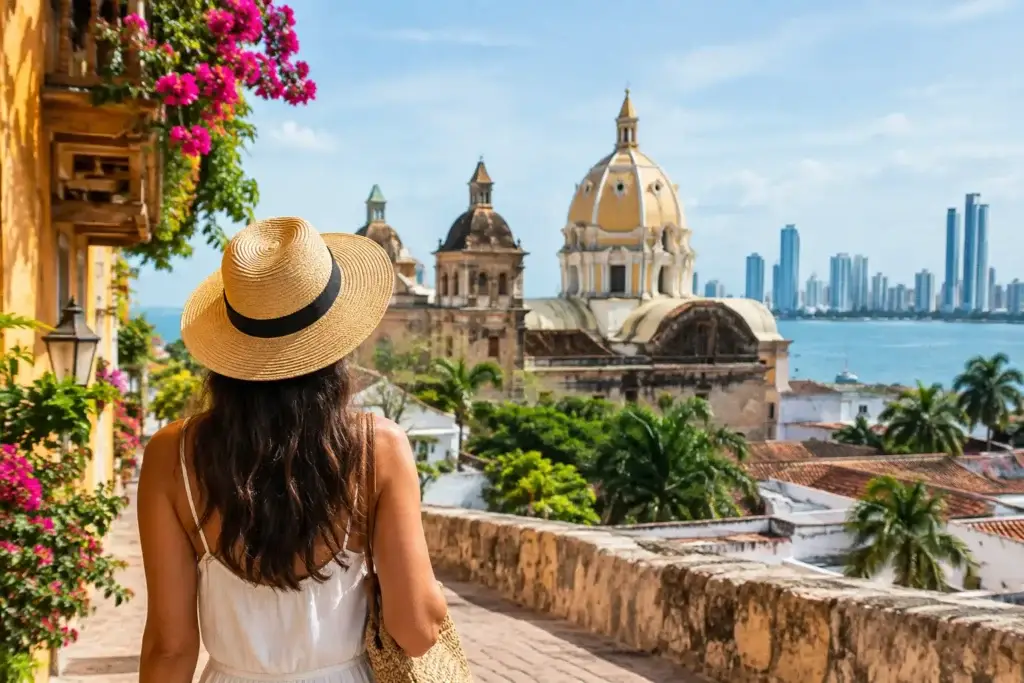
Cartagena rewards travelers who slow down. The city’s best cultural moments are not just behind museum doors – they are in the early clatter of a fruit cart, the shade of a centuries-old arcade, a cook stirring coconut rice, and the sound of salsa drifting from an open doorway. This Cartagena cultural day itinerary example is designed for one full, well-paced day that balances landmark history with the neighborhood energy that makes the city feel alive.
This plan works especially well for first-time visitors, couples, solo travelers, and small groups who want more than a quick walk through the Walled City. Wear light clothing, comfortable shoes with grip for uneven streets, and bring water, sunscreen, and a little cash for snacks and small purchases.
Start early in the Walled City
8:00 a.m. – Breakfast near the Clock Tower
Begin near the Clock Tower, Cartagena’s most recognizable entrance to the historic center. In the middle of the day, this area is busy with carriages, vendors, tour groups, and traffic. At breakfast time, it still has room to breathe.
Choose a Colombian-style breakfast with eggs, arepa de huevo, fresh fruit, cheese, and strong local coffee. If you prefer something lighter before walking in the heat, fresh juice and a simple arepa are enough to get you started. Save room for the snacks ahead.
From here, look through the archway toward Plaza de los Coches. This was once a major commercial space tied to Cartagena’s colonial port economy, including its painful history of enslavement. A good cultural day in Cartagena should leave space for both beauty and context. The city’s colorful facades and flower-filled balconies are real, but so are the stories that built them.
9:00 a.m. – Walk the plazas with a local story in mind
Take a relaxed route through Plaza de los Coches, Plaza Santo Domingo, Plaza de Bolívar, and Plaza San Pedro Claver. These are close together, but rushing between them misses the point. Give yourself time to notice the details: carved wooden doors, church towers, stone walls, and the mix of colonial, republican, Caribbean, and contemporary life.
At Plaza Santo Domingo, the large reclining sculpture by Fernando Botero is a popular photo stop, but the square is also ideal for people-watching from the edge of the plaza. Continue to Plaza San Pedro Claver, where the church and surrounding streets offer a deeper connection to the city’s religious and social history.
A guided heritage walk adds real value here. Cartagena’s streets are beautiful on their own, but an experienced local guide can explain why certain balconies were built the way they were, how the city defended itself, and how African, Indigenous, Spanish, and Caribbean traditions shaped its identity. If you are short on time, this is the part of the day worth organizing rather than trying to piece together from signs and phone searches.
Make time for history, not just photos
10:30 a.m. – Choose one cultural site
Rather than attempting every museum, choose one site and give it your attention. The Palace of the Inquisition offers a look at colonial institutions and the darker side of Spanish rule. The Museo del Oro Zenú is a smaller, focused stop where you can learn about the goldwork and traditions of the Indigenous Zenú people. The Museo Histórico de Cartagena is another strong option for travelers who want broader historical context.
Your choice depends on your interests. History lovers may prefer the Palace of the Inquisition, while travelers interested in pre-Columbian culture may get more from the Gold Museum. Museum hours and temporary closures can vary, so confirm the schedule before you build your day around a specific stop.
Keep this visit to about an hour. A cultural itinerary should feel enriching, not like a school assignment squeezed into vacation.
11:45 a.m. – Try Cartagena’s street-food classics
Before lunch, follow the smells. Cartagena’s street food is one of the easiest ways to taste its layered culture. Look for arepas, patacones, empanadas, carimañolas, fresh mango with lime and salt, and cocadas made with coconut.
Buy from vendors who are actively preparing food and have a steady flow of local customers. Freshness matters, especially in warm weather. If you are unsure what to choose, ask for a recommendation and mention any food allergies clearly in Spanish if possible.
This is not a replacement for lunch. Think of it as a small tasting break that gives the afternoon more flavor.
Lunch with Caribbean character
1:00 p.m. – Sit down for a local lunch
For lunch, choose a restaurant that puts Colombian Caribbean ingredients at the center of the plate. Fried fish with coconut rice and patacones is a classic, while seafood rice, posta negra cartagenera, or a hearty stew can offer a more regional experience. Posta negra is especially worth trying if you want something distinctly Cartagenero: tender beef in a dark, slightly sweet sauce, often served with rice and plantain.
Lunch is also your reset point. The early afternoon heat can be intense, and a rushed schedule is rarely enjoyable after two hours in the sun. Plan for at least an hour indoors or under shade. Travelers visiting during the rainy months should keep a compact umbrella handy, although showers often pass quickly.
See Getsemaní beyond the murals
2:30 p.m. – Head to Getsemaní
A short walk from the Walled City, Getsemaní has long been one of Cartagena’s most expressive neighborhoods. It is known for bright murals, hanging umbrellas, street art, music, and nightlife, but it is more than a backdrop for photos. This area has a working-class history, a strong local identity, and a long tradition of community celebration.
Start around Calle de la Sierpe and the surrounding streets, where painted walls tell stories of local heroes, musicians, dancers, and Caribbean pride. Then make your way toward Plaza de la Trinidad. In the daytime, you can appreciate the neighborhood’s architecture and daily rhythm without the evening crowds.
Respect matters here. Getsemaní is a lived-in neighborhood, not an outdoor theme park. Ask before photographing people, avoid blocking doorways for pictures, and support local businesses when you stop for a drink, coffee, or handmade souvenir.
3:30 p.m. – Add an art, music, or cooking experience
This is the flexible part of the itinerary. If you are traveling with a private group, it can be tailored around what your group genuinely enjoys. A cooking session is a great choice for food-focused travelers who want to learn the stories behind coconut rice, plantains, and coastal spices. An art-focused walk can reveal more about Cartagena’s contemporary creative scene. Music lovers may prefer a percussion, dance, or salsa experience that connects the city’s African-Caribbean roots to the sounds you hear at night.
Choose one, not all three. The trade-off is simple: packing in more activities may create more checklist moments, but one hands-on experience tends to leave a stronger memory.
End where Cartagena gathers
5:30 p.m. – Sunset on the walls
As the temperature eases, return to the historic walls near the Baluarte de Santo Domingo or another accessible stretch of the fortifications. Cartagena’s walls were built to protect one of Spain’s most valuable colonial ports from pirates and foreign attacks. Today, they offer one of the best places to watch the city shift into evening.
Arrive early enough to find a comfortable spot, then watch the light change over the Caribbean. This is a good time for a cold drink, but it is also a chance to pause. After a day of churches, plazas, flavors, stories, and street art, the walls put Cartagena’s scale into perspective: a city shaped by trade, conflict, migration, resilience, and celebration.
7:00 p.m. – Dinner or a low-key cultural night
For dinner, stay in the historic center or return to Getsemaní for a livelier atmosphere. Choose a place with Caribbean seafood, Colombian classics, or live music if you still have energy. If you want a quieter ending, enjoy dinner early and take a final walk through the illuminated streets.
Travelers who want to continue can look for a salsa bar, a live percussion performance, or an evening dance experience. Those with an early island tour the next morning may be better off calling it a night after dinner. Cartagena offers plenty after dark, but a good itinerary knows when to stop.
A few planning details that make the day better
The best version of this cultural day is paced, not packed. Start early to avoid the strongest sun, schedule indoor time around midday, and leave room for conversations and unexpected discoveries. Private transportation can be useful for travelers with limited mobility or for groups moving between neighborhoods, though much of the historic center is best explored on foot.
For a more personal version of this Cartagena cultural day itinerary example, Cartagena Adventures can help pair a locally guided heritage walk with food, art, or music experiences that fit your group’s pace. The goal is not to see every landmark in one day. It is to leave with a clearer sense of why Cartagena feels unlike anywhere else on the Caribbean coast.
Let the schedule guide you, but do not let it rush you. If a plaza feels especially alive, if a guide shares a story that stays with you, or if lunch turns into a long conversation over coconut rice, that is not lost time. That is the culture you came to find.