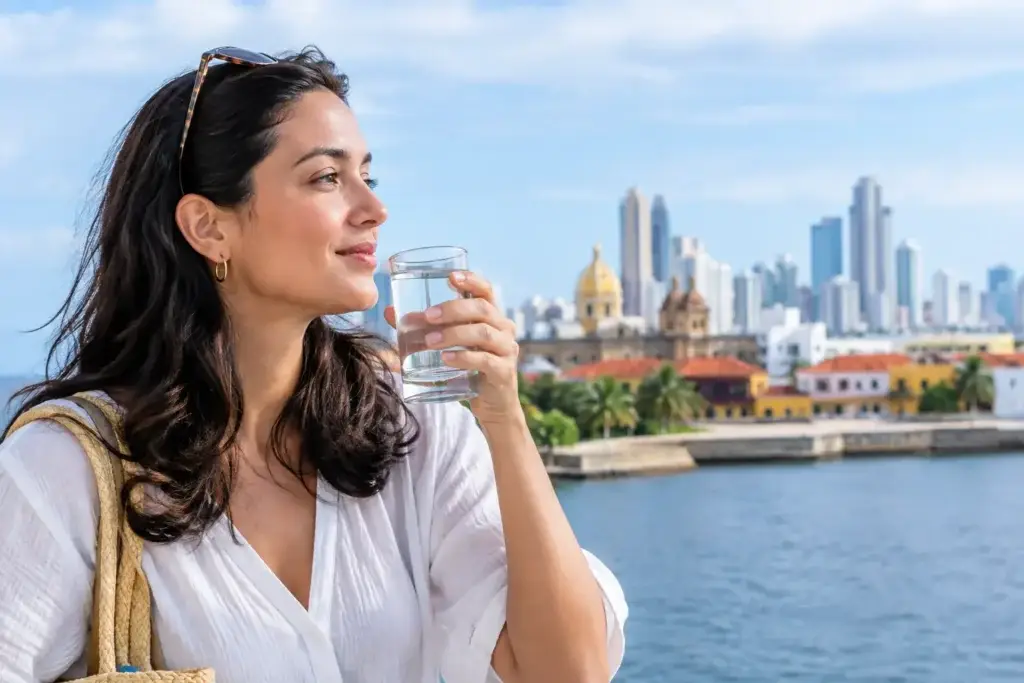
You have just arrived in Cartagena, the Caribbean heat is real, and the first thing you want is a cold glass of water. So, is Cartagena tap water safe? The practical answer for most international visitors is: do not rely on it for drinking. While the city’s water is treated, differences in plumbing, building tanks, and your own travel-sensitive stomach can turn an otherwise perfect beach day into time spent close to your hotel room.
That does not mean you need to spend your vacation worrying about every drop. A few simple habits make staying hydrated easy, whether you are wandering the Walled City, dancing until late in Getsemaní, or heading out for a day on the Rosario Islands.
Is Cartagena Tap Water Safe to Drink?
Cartagena’s municipal water system treats its water, and many local residents use tap water in daily life. But water safety is not only about treatment at the source. In a tropical coastal city, water can pass through older pipes or sit in rooftop and underground storage tanks before reaching a hotel, apartment, restaurant, or shop.
For visitors from the United States and other countries, that variability is the issue. Your body is not accustomed to the local mix of minerals and microorganisms, even when the water is generally considered treated. A mild stomach reaction can happen without the water being visibly dirty or a business doing anything wrong.
Our local advice is straightforward: choose purified, filtered, or sealed bottled water for drinking throughout your stay. It is an easy precaution with very little downside, especially when your itinerary includes boat rides, beach clubs, rum tastings, late-night plans, and long walks in the heat.
The answer can also vary by where you stay. A well-managed hotel with modern filtration may have better water handling than a small rental with an uncertain tank-cleaning schedule. Unless your accommodation clearly confirms a reliable filtration system, use drinking water you know is treated.
What About Ice, Coffee, and Fresh Juice?
Ice worries many travelers, but there is no need to avoid every cocktail or cold drink automatically. Established restaurants, hotels, bars, and beach clubs that serve international guests commonly use purified water or commercial ice. High turnover also helps, since ice is made and used regularly rather than lingering for days.
Still, use your judgment. If you are eating at a trusted, busy place with clean facilities, an iced coffee, margarita, or fresh juice is usually a reasonable choice. At a very remote stop, an informal street setup, or a place where hygiene gives you pause, ask if the ice is made with purified water or choose a drink without ice.
Coffee and tea are generally low concern when they are prepared with boiling water, though the cup itself should be clean. Fresh juices are one of Cartagena’s great pleasures, from mango and passion fruit to icy limonada de coco. Order them from reputable vendors, watch for clean preparation when possible, and skip ice if you are unsure of the water source.
The same common-sense rule applies to fruit. Choose fruit that you can peel yourself, such as bananas, oranges, and mangoes. Fresh salads and cut fruit can be wonderful at quality restaurants, but they carry more risk because they may have been rinsed in water you would not drink.
Can You Brush Your Teeth With Tap Water in Cartagena?
Many travelers brush their teeth with tap water and have no problems. But if you want the lowest-risk approach, use bottled or filtered water for brushing too. It takes only a small amount, and it removes one more variable from your trip.
You do not need to avoid showering. Tap water is fine for showers, washing your hands, and everyday personal care. Just try not to swallow it. This is especially useful advice for families traveling with young children, who may be more likely to take a mouthful of shower water by accident.
If you wear contact lenses, avoid rinsing them with tap water. Use proper lens solution instead. It is a small travel habit that is worth keeping anywhere you go.
Staying Hydrated in Cartagena’s Heat
Dehydration is often a bigger threat to a great day in Cartagena than the water itself. The combination of heat, humidity, sun, saltwater, and celebratory cocktails can catch up with travelers quickly. If you wait until you feel thirsty, you are already behind.
Start your morning with a full bottle of purified water, particularly before a city tour or island departure. Bring more than you think you will need, and drink steadily rather than finishing a large amount all at once. On full-sun days, add an electrolyte packet or sports drink, especially if you have been swimming, sweating, or drinking alcohol.
A reusable bottle is a smart option if your hotel has a confirmed filtered-water refill station. Otherwise, sealed bottles are widely available at hotels, convenience stores, supermarkets, and restaurants. Check that the cap seal is intact before opening it. This is a simple habit, not something to be anxious about.
Coconut water is another refreshing option when you are out exploring. It is easy to find, naturally hydrating, and feels especially good after a hot walk through the colorful streets of the historic center.
Water Safety on Island and Boat Trips
A day in the islands is one of the best parts of a Cartagena trip, but it requires a little extra planning. Freshwater access is more limited away from the city, and water systems can differ significantly from one island stop to another. Bring enough sealed water for the ride and the beach, even when drinks are available for purchase.
On organized excursions, ask what water is included and whether drinks are served from sealed bottles. A professional operator should be clear about what is provided, how long you will be on the water, and what you should bring. If you book a private boat, keep a cooler stocked with water, electrolyte drinks, and plenty of ice from a reliable source.
Be careful with the sun, too. Sunburn and dehydration can feel surprisingly similar at first: fatigue, headache, nausea, and dizziness. Take shade breaks, wear a hat, and do not let the party pace outrun your water intake.
If Your Stomach Feels Off
A stomach issue on vacation is frustrating, but it does not always mean you drank unsafe water. Rich food, spicy sauces, heat, alcohol, disrupted sleep, and travel stress can all play a part. Start with rest, purified water, electrolytes, and bland food if you feel unwell.
Seek medical guidance promptly for severe or persistent diarrhea, fever, repeated vomiting, signs of dehydration, blood in stool, or symptoms that do not improve. Travelers with medical conditions, pregnant travelers, and parents of young children should be especially cautious. Travel insurance and knowing where to find reputable medical care can provide welcome peace of mind before you arrive.
There is no prize for being adventurous with your hydration. Save that energy for snorkeling over coral, trying ceviche at a spot locals love, and watching the sunset from the water. Choose purified water, listen to your body, and let Cartagena Adventures help you spend your vacation making stories worth bringing home.